Tuesday, November 15, 2011

A Visit With the Conservator of Photographs at the Art Institute & the Timothy O'Sullivan Exhibit

This past week we took our second trip as a class to the Art Institute to talk with the Conservator of Photographs, Douglas Severson. Doug told us that he has held his position at the Art Institute for over 30 years. He then began to walk us through the types of photography that he comes across working with in his position. Starting with an example of a daguerreotype, Doug went through other examples he had pulled from the Art Institute's photo vaults of salt prints, albumen prints, platinum prints, silver gelatin, Type C or chromogenic color prints, and cibachrome prints. A few of the examples he had pulled for us had minor damages or signs of aging. Some types of photography processes are more sensitive to damage from aging than others, but Doug noted that, from his personal experience, chromogenic prints has been the least stable photo process and most difficult to preserve. Doug made a point to tell us that, although there are some techniques that photo conservationists can use to repair damages, they typically try to focus on stopping any aging of their photographs where it's currently at instead of trying to restore it. This is also because many of the restorative processes that try to restore the original look of photographs are not guaranteed to work and risk damaging the photo even further, such as the silver intensification process that was experimented on albumen prints.

The current photographic exhibit on display at the Art Institute is made of mostly albumen prints of the surveyed land between the eastern border of California and Cheyenne, Wyoming photographed by Timothy O'Sullivan between 1867 and 1872. The survey that O'Sullivan took part in surrounded the completion of the transcontinental railroad in 1869. During this period, Americans were fascinated by the possibilities that the West held for the future of the country but few had seen it. The survey that O'Sullivan documented satisfied some of the scientific, political, and financial curiosities that Americans had at the time. While the majority of O'Sullivan's photographs were landscapes, he also had a collection of underground mining photos that he took using magnesium flares as the flash. The commonality between most of O'Sullivan's photos and what makes them particularly distinct from other landscapes from the same time period is that they each hold a lot of complexity within, what you think would be, a simple photo. For example, many of O'Sullivan's pictures include people. While some landscape photographers might do this to show the scale of the scene they are capturing, the poses of the people in O'Sullivan's photos (laying down, unnatural postural positions, etc.) suggest that he had a vision for the how the men featured in his photos would be portrayed. In addition to these photographs, there were other collections of photos of rocks and mountains that seemed to take on an other worldly feeling. With foggy surroundings and geometric compositions, these series of photos further suggest that O'Sullivan had an artistic vision for his photographs past what a typical landscape photographer would.


Wednesday, November 2, 2011

Touring a Bank's Collection of Photographs

When most people go into a bank, the last thing they are usually thinking about is the art or photographs displayed on the walls. But the curator of this artwork thinks about this all day. Last week we took a tour of the photo collection of one of the most prominent banks in America. Although the display of an Ansel Adams print behind the tellers at the bank was awesome, it was what we saw behind the scenes in the bank's main offices in downtown Chicago that was really something to see. We met with the collection's curator, Whitney, upstairs in onfe of the banks' conference rooms (at an impressively large table) to discuss the history of the collection. She told us that Beaumont Newhall, a highly influential curator and historian, bought the initial 350 photographs to start the bank's collection. Since then, the bank has accumulated around 5500 photos in its collection. And while only a few landscape photos are on public display in the actual bank, each office in the downtown building gets its own photo from the collection and each office resident gets a say in the choosing of the photo they get in their work space. In addition to this service within the bank, Whitney is in charge of over 50 touring exhibitions internationally of the bank's collection. These exhibitions are free of charge to any museum that houses them and come completely ready to hang in their space. The purpose of these exhibitions is to restore some sense of "humanity" to the bank and help out arts organizations, especially in such hard economic times.

Currently, the theme of the majority of the photos in the hallways of the bank's offices are street photography themed, with photographs by Robert Frank, Henri Cartier-Bresson, Lee Friedlander, and William Eggleston, just to name a few. Whitney told us that the purpose of putting all this effort into displaying photos in the offices and work spaces is to excite the business environment and help people think more creatively. I thought this was interesting, especially in a place like a bank, because people don't typically think of bank employees needing to surrounded by art or needing inspiration. But, after being surrounded by so many amazing photographs, its easy to see how their display makes coming to work more enjoyable and gives a sense of comfort to an office-filled work place. I couldn't find my favorite picture that was on display, but here is a portion of it. It's a photo by Robert Frank titled Man With Striped Pants and Tulips. Here are the tulips:

Tuesday, October 11, 2011

Hedrich Blessing Photography

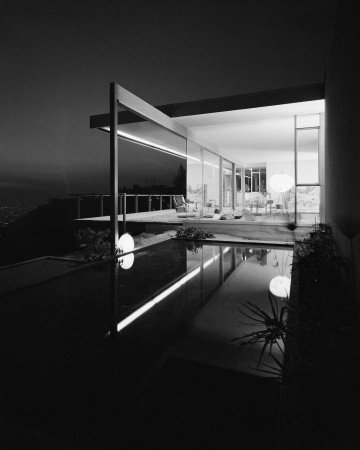
This week our Photography in Chicago Now class took a trip to the studio and offices of Hedrich Blessing Photography. The Chicago-based organization specialize in architectural photography and may just be the oldest photo studio in the world. Since starting in 1929, the studio has found what works best for them. We were lucky enough to hear a few of these tips during our afternoon spent touring the facility. The studio has five photographers that were mentored by another photographer at Hedrich Blessing, but even with five pairs of eyes behind the cameras they try to keep similar goals with the photos. A lot of the Hedrich Blessing photos make the conscious choice to elevate the look of the building and not having people in the photo because people tend to look at people first and they want the focus to be the architecture. Another interesting business practice of the Hedrich Blessing studio is that they don't use any contracts. Therefore, none of the clients that they shoot for are obligated to pay for the work they shoot unless they actually use the photographs. I thought this was strange at first, but, after thinking about it, it makes sense because it motivates the photographer to do their best work and capture what the client wants in the first shoot. This not only cuts costs, but also makes the Hedrich Blessing studio look very impressive. A third business ideology that Hedrich Blessing believes in is that they always aspire to keep the studio young. I heard about an example of this during our visit to the actual in-house studio. As we walked into the the huge warehouse-looking space, I quickly noticed what looked like small tire tracks over the white sheetrock and floor. The explanation, of course, was that someone at Hedrich Blessing had bought a control-operated toy car and had used the sloped space of the studio to test how far up the wall they could get the car. This, in addition to the more technical fact that the company went completely digital 4 years ago, shows the personality of the company and the joy that they bring to work.

There was a quote from the movie we watched last week called Visual Acoustics: The Modernish of Julius Schulman that made the point that the majority of people never see the iconic pieces of architecture that are constructed, so the role of the architectural photographer is imperative. Although Hedrich Blessing is a photography studio, they believe that architecture is the only necessary art. So it makes sense that the photographs the create with architecture as their subject is stunning and timeless. Below are a collection of a few photographs that have been taken by the Hedrich Blessing photographers over the years.


Wednesday, October 5, 2011

The International Museum of Surgical Science and 'Visual Acoustics: The Modernism of Julius Schulman

This week we visited the International Museum of Surgical Science (IMSS). Since the start of the semester, this had been the out of class trip that I was most excited about and it was definitely worth the weeks of anticipation. The museum is located in the Gold Coast district of Chicago on North Lake Shore Drive, a predominantly rich neighborhood. In addition to its location, the IMSS was not originally built to serve as a museum. The museum exists within a mansion that was built in 1917 and didn't become the IMSS until 1954. Upon exploring the museum a bit, it's easy to see that not much was done to the interior to make the building more suitable for exhibits. Instead, the pieces on display must fit around the original design of the mansion. Since the title of our class is 'Photography in Chicago Now,' it made sense that we spent the majority of our time upstairs at the 'Milestones in Medical Imaging' exhibit. The exhibit filled two rooms with the history of x-rays and medical diagnoses. The portion of the space that I particularly focused on was in the hallway entrance. Here, there was a collection of x-rays that were taken between 1900-1910 by a German immigrant who moved to Chicago named Emil Grubbe. Grubbe, an early pioneer of x-ray therapy and radiology, would analyze the s-rays to diagnose patients with diseases or other health problems. Although it is hard to say for sure because the prints were not labeled, it may be possible that some of the x-rays Grubbe took were for entertainment while others were used for medicinal purposes. A few of the x-rays featured men and women with their jewelry still on, which doesn't occur in the x-rays with obvious illnesses or problems. Overall, the collection was very interesting and diverse (one print featured a person with a bullet lodged in their upper leg and another showed a pair of a child's hands.) I wish that the prints had a definite story attached to each one were perhaps featured in a better part of the room, instead of the hallway. As with much of the exhibit, Grubbe's x-rays were also not very well preserved, but this did lend a certain charm and intimacy to the overall mood of the museum.

After our visit to the IMSS, we were assigned to watch a great documentary called Visual Acoustics: The Modernism of Julius Schulman. Before watching the film, I had not heard Juilus Schulman's name, but had seen a few of his photographs and was familiar with a few of the buildings that became his subjects as an architectural photographer. As I watched the film, it was easy to become infatuated with Schulman's passion for his craft and appreciate the fresh perspective he brought to the trade. The trademark of his work was his use of one-point perspective to emphasize the clean lines of modernist architecture, mostly in his interior shots. He also payed special attention to the surrounding area of a building or home to show how it fit into its surroundings. As his career progressed, his photographs moved beyond being beautiful documentations of modern architecture, but he became an authority on what architects were promising and gave many a start to their lifelong careers. Until later in his life when his work was shown as artistic photographs and his portfolio was made into photography books, Schulman's photos were mostly printed in magazines about homes, architecture, etc. This progression in Schulman's career brought to mind an idea that was brought up during our trip a few weeks back to the Art Institute of Chicago: most photography was not seen as "art" until later in the 20th century. Towards the end of the movie, Schulman is doing a publicity appearance and a woman tells him that he's a "rock star." Although his work could not have existed if he had come along in another generation, it's a shame that his photographs were not given the widespread acclaim that they deserved until later in his life when they were viewed as "art." That's not to say that he went his whole life without any accolades for his work, because he was known as the top modern architecture photographer for decades, but I can't help but wonder what his career would have looked like if he had been coming up onto the scene now. Below are a few examples of his work for your viewing pleasure:


Wednesday, September 28, 2011

River North Galleries: Catherine Edelman & Stephen Daiter

This week, my Photography in Chicago class visited two great galleries in the River North District: the Catherine Edelman Gallery and the Stephen Daiter Gallery. We made our first stop at Catherine Edelman's to talk to the gallery's Assistant Director, Juli Lowe. After wandering through the semi-subterranean, white space and absorbing the type of photography and mixed media that Edelman features in her gallery, we asked Juli some questions about the operation of the gallery and the pieces that we saw. The front half of the gallery was dedicated to a series of photos called Double Life that were taken by Kelli Connell, a Chicagoan photographer. She told us that their gallery aspires to feature as many local artists and students as they can. This was also evident in the eastern half of the gallery, where many of the featured artists were from Chicago. But the gallery also features artists from all over the world, such as Roger Ballen who currently resides in Johannesburg, South Africa. Juli informed us that a crucial way for her and the other staff at the gallery to find new artists is by perusing blogs. This method is so important, in fact, that a section of their gallery is dedicated to artists they have found online. She went onto explain that much of how they run their business is by looking through blogs and viral marketing. The Catherine Edelman gallery has their own website, a Twitter, a Facebook, a blog, and email subscription lists. I also found it interesting that the gallery now has an online store, so all the the art in the gallery is available for sale to people who may have not even seen it in person. Below is on of the photos on display now at the Catherine Edelman gallery. It's by Roger Ballen and is titled Dirkie.


Our second stop of the day was across the street at the Stephen Daiter Gallery. As opposed to the Catherine Edelman space, the Stephen Daiter Gallery was on the fourth floor in a space that would not be found by someone unless they knew exactly where they were going. The gallery was also very different from the Catherine Edelman Gallery because the space was darker (filled with blacks and shades of gray, rich woods, and less natural light) and only featured one artist: Alex Webb. The contemporary photographer's work popped in the dim gallery, since his photos were highly reliant on the natural, vivid colors he captures. Although Alex Webb is a contemporary artist, the Stephen Daiter Gallery is also known for their collection of vintage 20th century photos, which was not on display during our visit. But during our time there, we were lucky enough to go behind the scenes a bit and see some of the amazing black and white prints from the 1930s and 40s in their possession. Below are two photos currently being featured as part of the Alex Webb collection at the Stephen Daiter Gallery that I loved.

Wednesday, September 21, 2011

The Art Institute of Chicago & 'Commercial Art Gallery' by Edward Winkleman

This week we visited two exhibits at the Art Institute of Chicago: Dolls & Masks by Ralph Eugene Meatyard and Avante-Garde in Everyday Life. The two exhibits were wildly different. The first we explored was the Dolls & Masks exhibit that celebrated the life and work of Ralph Eugene Meatyard. Previous to our trip that day, I had never heard of Meatyard or seen any of his work, but I was pleasantly surprised. His monochromatic, mid-century, somewhat sombre portraiture was right down my alley. At first glance, the photos displayed around the subterranean gallery looked very mysterious and all the portraits, as the exhibit title demonstrated, were masked giving the photos a sense of anonymity. As we talked to Liz Segall, the Assistant Curator Director, she told our class the story behind these dark photos and found out that most of the faces behind the masks were members of Meatyard's family. Segall shared with us that the grim mood captured in his photography was purely accidental. The masks, however, were more intentional. Meatyard loved to confuse the identity of his subjects and also preferred to take staged pictures, which the use of dolls and masks combined with blurred or shadowed faces achieved. Below is a photo from Meatyard's Ambrose Bierce series.


We also visited the Avante-Garde in Real Life exhibit in the contemporary wing of the Art Institute. This exhibit was a combination of photographs, photomontage, and photographically illustrated posters and books in addition to other objects, such as dishware, from eastern Europe during the first half of the 20th century. As a whole, I think the collection had an incredible message that art should be integral to everyday life. From the cultural photo collages, the invention of book cover art, and comical altered political photographs on the covers of the AIZ Magazines, the collection reminded our class of the infinite ways that photography can be used to shape the evolution of society. Here is an example of one of the many AIZ Magazines that the Art Institute has on display:

Wednesday, September 14, 2011

The Universal Survey Museum & 'Our Origins' at the MoCP

This week we read a great introductory piece on the purpose and impact of the museum experience called The Universal Survey Museum by Carol Duncan and Alan Wallach. In the reading, Duncan & Wallach argue that museums often serve as iconic representations of authority. Throughout history, museums have served as both political figures (such as the Roman displays of war trophies) or as more cultural icons of a place (as seen through the architecture of many museums that mirror the tradition of mausoleums and royal temples.) Much of The Universal Survey Museum also addresses the fact that museums, whether people like to admit it or not, have historically brought separation between classes. As Duncan & Wallach state, "the museum helps foster the illusion of a classless society." They then go on to make a valid statement that "there is almost always a contradiction between the ideal visitor as defined by the museum and the actual visitor." Through my interpretation of the the reading, Duncan & Wallach bring forth an interesting argument that although the modern survey museum may not be as "universal" as the title of their piece may lead one to think. Of course, all who want to visit a public museum are more than welcome, but the leisurely time it takes to stroll a museum's hallways and the level of knowledge it takes to fully appreciate the pieces on display are "available only to a narrow elite." With this in mind, it was interesting to look at the class I'm taking as part of my higher education, Photography in Chicago Now, and our course schedule. Much of our time this semester will be dedicated to doing exactly these two things: using our class time to visit museums and educate ourselves. I've created some food for thought that has no correct answer: Are we, the students of Columbia College Chicago, apart of a narrow elite? Are we preparing ourselves to be? Hmmm...

For our first class of the semester we took a (very short) trip to the Museum of Contemporary Photography, which is conveniently located on the Columbia College campus. The museum is currently showing a great exhibit called Our Origins which, as you can probably assume, displays a talented group of artists and their work related to human existence and consciousness. The first collection of photographs we looked at was by Alison Ruttan from her series Four Year War at Gombe. The pictures were inspired by the notes of British primatologist Jane Goodall and her discovery that the lives of chimpanzees often reflect the tendencies we have as humans. So, with this as her inspiration, Ruttan photographed a few people showing the diverse emotions that both man and ape share: anger, hostility, love, and familial comfort. In addition, the clustered way in which the photos are displayed creates a sort of storyboard and helps the viewer to feel immersed in this primal jungle setting.

Although there were three floors to this exhibit, my favorite photographs in Our Origins was located directly across from Ruttan's. From having no previous knowledge of the artist, the two photograms by artist Aspen Mays initially resembled a couple of small Rothko paintings. But upon taking a closer look and reading about the work, Mays' was inspired by NASA’s claim that 1 percent of television static is caused by cosmic radiation left over from the Big Bang. To think about this strange theory and how such a distant pre-historical event could be at all related to the technology that our current culture thrives on was so intriguing to me. But to see this odd cosmic idea translated into two beautiful shades of blue and orange had me completely baffled. The variation of the work at the Our Origins exhibit at the Museum of Contemporary Photography was amazing, but the stories behind each piece was what I enjoyed most.